




Low-Carb Meal Planning for Couples
When One Partner Isn’t Low-Carb

When you build dinner around a dish you both like, you only need to change the carb-heavy part on each plate to keep the cooking manageable and your own eating goals met. In this article, we’ll be providing ideas for how to make this work using products we stock at The Low Carb Grocery.
If you eat low-carb and your partner doesn’t, dinner has a way of splitting into two cooking projects.You roast chicken and steam vegetables on one side of the stove while they boil pasta and warm bread on the other. Done night after night, that gets old and leaves you with twice the prep and a fridge full of half-used ingredients.
Most nights, though, you don’t need two genuinely different meals. You need one shared base and a few swaps.
How the Modular Method Works
Through picking certain meals with an easy, obvious swap, the method is easy and can be broken down into one core tenant: you’ll share a protein but change out the accompanying carb. Think pasta, noodles, rice and bread.
With a shared marinara sauce or sauteed chicken and vegetables, substituting the pasta or rice that goes along with it is simple. The other person can have regular rice or pasta, for example, and you can have your low carb alternative of choice. This concept can carry you across all kinds of different cuisines since it’s so common to have a swappable carb as a core part of the meal.
A few habits keep it running smoothly:
- One low-carb twin for each of your partner’s everyday staples
- Protein and sauce cooked in a single batch, split before adding starch or carbs
- The same seasonings on both plates, so it still tastes like one meal
- Shelf-stable swaps like konjac noodles, low-carb wraps, and baking mixes kept on hand
With those on the shelf, most weeknight dinners take one pan and a couple of finishing steps.
Pasta Night
Pasta is the easiest place to start, because the noodle is the only part that changes.
Beginning with the sauce:
Brown ground beef or Italian sausage in a wide pan over medium-high heat, breaking it up and leaving it undisturbed for a minute at a time so it takes on colour instead of steaming. Pour off the excess fat, add whatever vegetables you might want, then stir in a jar of Hunt’s no added sugar pasta sauce, or any other sauce of your choice. Let it simmer on low for ten to fifteen minutes.
Boil the regular spaghetti for your partner in well-salted water and for your own plate, reach for one of these:
- nuPasta konjac pasta, 0g net carbs and around 25 calories per pack
- Better Than Foods konjac noodles, in spaghetti, penne, and other shapes
- Al Dente Carba-Nada egg fettuccine, higher in protein and ready in three minutes
Konjac noodles (and rice) arrive packed in liquid, so you should rinse them well under cold water and pat dry before you warm them in a hot pan to evaporate excess liquid. After a thorough drying, the noodles will take your sauce better and the texture should be improved as well.
A single pot of sauce can carry several dinners and you can do just about anything regular pasta can do with your substitutes (everything from pasta bakes to traditional sauces) so it’s a great choice to cut down on the prep time.
Taco Night

Tacos already come in separate parts and that makes them simple to share. A beef taco bar mostly runs itself, with the same spiced protein going onto every plate. Season a single pan of ground beef, chicken, or shrimp, set the toppings out, and let everyone build their own plate.
With beef or chicken, brown the meat first, then stir in your seasoning and a small splash of water to let it cook down into a glaze that clings to the meat. Shrimp wants the opposite: high heat and a quick turn, about two minutes a side, until they go pink and stay tender.
Your partner can stick to regular flour or corn tortillas but you could reach for:
- Joseph’s Bakery low-carb wraps, also coming as 0 cholesterol pita and lavash
- La Tortilla Factory tortillas, a good source of protein made from soy flour
- Carbonaut Gluten-free Tortillas, which store well in the freezer
Warm both kinds of tortilla in a dry skillet for a few seconds a side so the low-carb ones stay soft enough to fold, and then round out the table with a jar of salsa, shredded cheese, sour cream, and sliced avocado.
Pizza Night
Similar to taco night, pizza divides into one set of toppings and two crusts. The key step for any low-carb crust is to bake it on its own before the toppings go on so it sets and holds firm instead of going soft under the sauce.
- Ready to bake: a Carbonaut keto pizza crust, topped and baked right away
- From scratch: Carbquik, a carbalose baking mix with about 2g net carbs per serving and no added sugar
With the Carbonaut crust, brush it with a little oil and bake it on a hot tray or pizza stone so the bottom crisps, then add sauce, mozzarella, and toppings and slide it back in.
Carbquik works from a quick dough. You just have to mix it with egg and water or with melted mozzarella for a chewier, fathead-style base. Once it’s mixed, press it thin on parchment and par-bake for about ten minutes until it firms up. Spread the same marinara and cheese over your crust and your partner’s regular dough, scatter on your toppings, and bake them together.
Stir-Fries and Rice Bowls
A stir-fry is one quick-cooking, shared pan with the starch split at the end.
Get a wok or wide skillet good and hot to cook the protein first with your choice of aromatics and move it to a plate. You want to then add the vegetables to that same high heat so they sear rather than stew. And once that’s done you can return the protein, add a splash of your sauce, and toss with that consistent high heat for another minute.
As with everything else, you’ll be able to easily divide your meal between your partner’s typical rice and your substitute. Try out these options:
- Rice-shaped konjac from Better Than Foods
- A serving of LIVIVA dried shirataki rice
Konjac rice behaves the same as the noodles, so rinse it and dry it in a hot pan for a couple of minutes before saucing to keep it from staying watery.
Burgers and Grilling
Firing up the barbeque for burgers is great for easy splitting since the protein is already the centre of the plate and the carb is mostly there to hold it. While your partner has a regular bakery bun, you could try one of the following options:
- a Carbonaut keto hamburger bun,
- a crisp lettuce wrap
- a low-carb pita from Joseph’s Bakery
We suggest toasting the Carbonaut bun cut-side down for a minute near the end to firm up so it holds the patty without getting soggy.
Once your protein has finished cooking, you can serve it all up with a salad and let everyone dress their own with Walden Farms salad dressings, which add no net carbs to the plate.
Snacks and Dessert
Snacks and dessert can also work the same way as any other meal. You make one thing for the table then change what each person reaches for.
For snacks, the dip is the shared base. Stir together a quick spinach-and-artichoke dip or a bowl of guacamole, and set out two things to scoop with:
- Your partner: regular chips, crackers, or pita
- You: Cello Whisps cheese crisps or raw vegetable sticks
The Whisps are sturdy enough to hold a thick dip without snapping, so they scoop about as well as a cracker does.
Dessert might be a little trickier than chips and dip, but ultimately it can divide similarly to a baked pasta dish. What you’ll do differently is you’ll split the batter instead of the noodles.
Cream the butter, eggs, and vanilla in one bowl as the shared base, then portion it into two. Stir regular flour and sugar into your partner’s half and into yours, you can try out Anthony’s Goods blanched almond flour and Swerve sweetener. After this, fold a handful of Lily’s no sugar added baking chips through both, since the stevia-sweetened chips suit either batter. Spoon the two onto opposite ends of one tray, mark your side if they look alike, and bake together.
Almond flour colours faster than wheat, so set the oven a little lower than the recipe says and pull your side a few minutes early to keep the edges from over-darkening.
A no-bake version follows the same split. Whip some cream or stir up Greek yogurt as the base for both bowls. Your partner spoons theirs over granola or crushed cookies, and you layer yours with berries and a scatter of those Lily’s chips.
In Conclusion
Once a few low-carb versions of your partner’s favourites are on the shelf, the week starts to plan itself. You shop once and cook once, then split the meal at the starch instead of at the stove.
Low-carb eating in a shared kitchen doesn’t have to mean cooking alone or eating off to the side while everyone else sits down. We hope that with this article, you already have some meal plans in mind to try out at home, and you’ll find out firsthand just how easy it can be.
To set yours up, browse our low-carb pastas, breads, wraps, sauces, and baking staples at The Low Carb Grocery and stock what you need to cook a single dinner for two appetites.
Happy low carb cooking!


Explore Our Popular Shopping Categories



More Low Carb Lifestyle Articles
Low Carb University: Everyday Alternatives
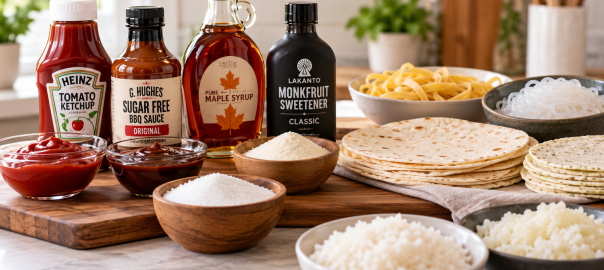
We compared common staples with their low-carb replacements at the same serving. Regular ketchup has 10 g of net carbs per two tablespoons, and Crazy Mooskies has 1 g. Cooked spaghetti has 26 g per 100 g, and nuPasta konjac fettuccine has none. The full chapter covers sauces, syrup, tortillas, pasta, rice and breadcrumbs, plus which swaps to start with.

Low Carb University: Nutrition Labels
Canadian labels can’t show net carbs, so the math falls to you. Our latest chapter covers what’s inside the carbohydrate line, how to calculate net carbs, and how to spot sugar in the ingredient list. It also explains why a keto snack can still carry a “high in saturated fat” symbol. Read on to learn more.

Low Carb University: The Baking Shelf
Low-Carb Pantry University, Chapter Three: the baking shelf. A quarter cup of coconut flour replaces a full cup of wheat flour. One tablespoon of flaxseed meal and three of water makes an egg. Half a teaspoon of xanthan gum thickens a cup of liquid. Every ingredient on that shelf is replacing one specific thing wheat flour and sugar used to do. Our new guide explains which is which.
Low Carb University: 25 Pantry Staples
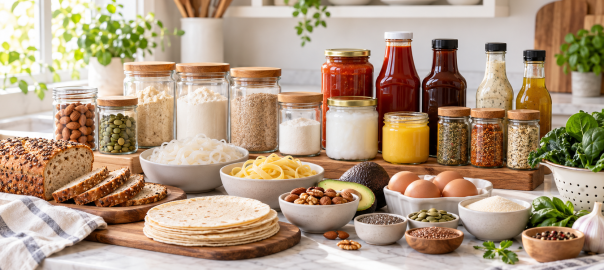
Twenty-five low-carb staples, sorted by what they actually do. Bread at 1g net carbs a slice. A full plate of pasta for 25 calories. Sauces with the sugar taken out. Protein you can eat straight from the bag. Every entry lists its carb count and how long it keeps once opened. Chapter Two of Low-Carb Pantry University is on the blog now.
Low Carb University: Building Your Pantry
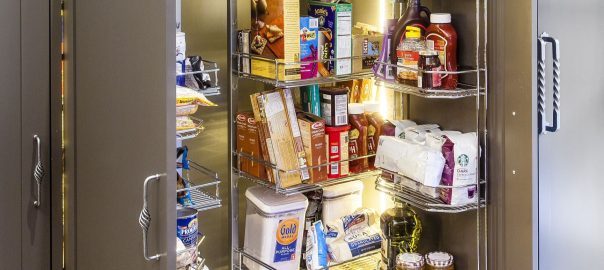
Most first low-carb grocery orders are too big. Three sweeteners, four flours, and a month later half of it is unopened. Our new pantry guide covers what’s actually in each category, which products to start with, and the five items that will carry you through a month of cooking. Sweeteners, flours, bread, pasta, condiments, spreads, chocolate and snacks, all in one place.
RECENT POSTS
Popular Categories



© 2026 Low Carb Grocery. All Rights Reserved.