
Low-Carb Baking Ingredients Explained
Low-Carb University, Chapter Three
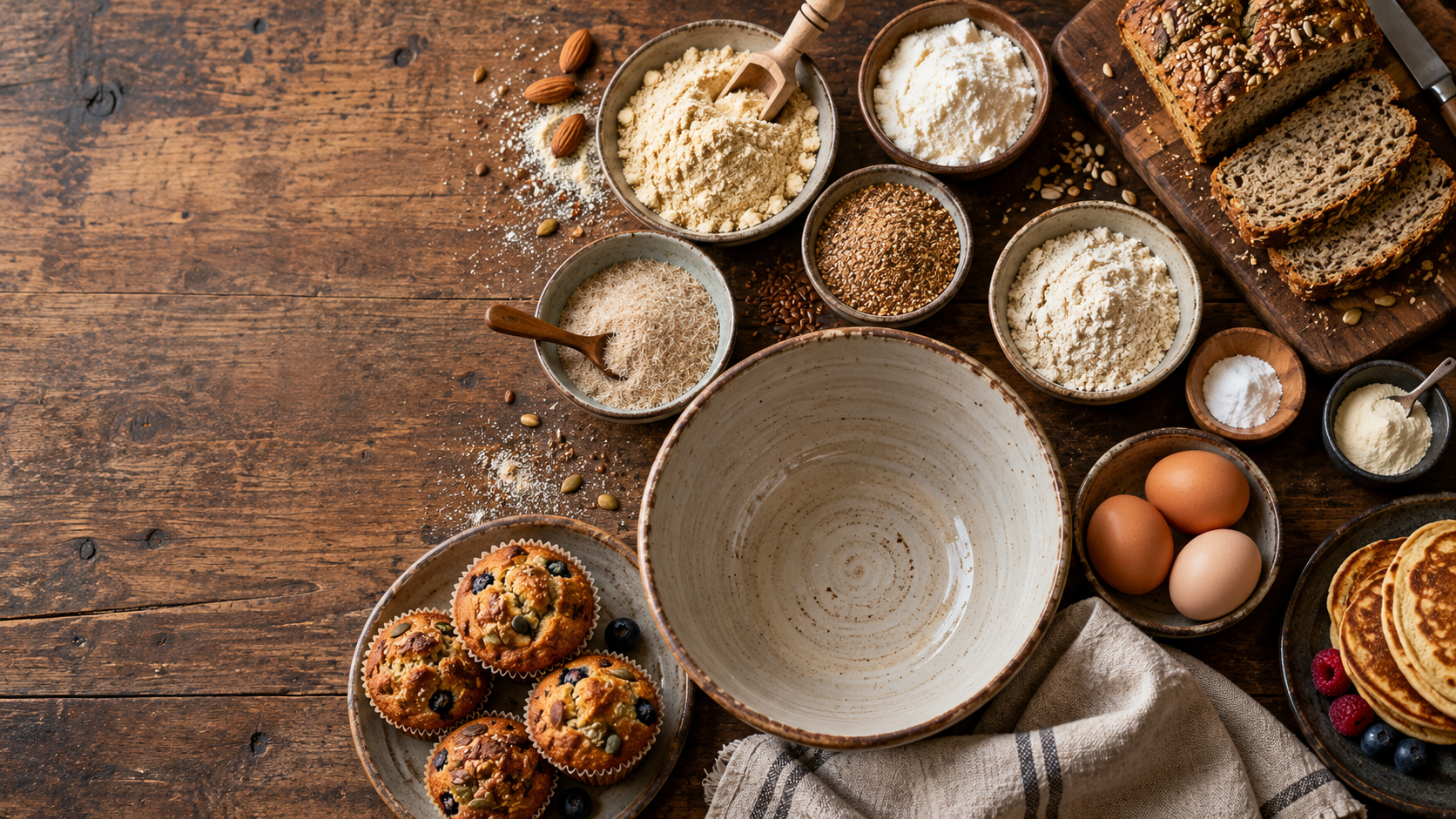
Welcome to Chapter Three of Low-Carb Pantry University. Chapter One worked through the pantry category by category, and the baking shelf gets a chapter of its own.
Baking is the part of low carb cooking that goes wrong most often.
Taking the carbs out of dinner means leaving the potatoes off the plate, and the rest of the meal cooks the way it always did. Taking them out of a muffin means replacing the wheat flour and the sugar with something else, and the recipes that do it rarely say how the replacements function.
The same questions come up at the counter in Markham. Why can’t coconut flour take the place of almond flour cup for cup? What holds a crumb together with no gluten in the bowl? How much sugar can a monk fruit blend replace before the texture changes?
What Flour Does
Wheat flour does two jobs in a recipe. Its starch absorbs water and sets into a solid crumb in the oven, while its gluten forms an elastic network that traps gas and lets a dough rise and hold its shape.
No single low carb ingredient does both jobs. A low carb recipe splits that work across several ingredients, each one taking over a part of what wheat flour did on its own.
Almond Flour
Almond flour works in breads, cakes, cookies, brownies and pancakes with little adjustment to the recipe.
Anthony’s mills its blanched extra-fine almond flour from almonds with the skins boiled off, which leaves a finer and smoother flour with a pale colour. Unblanched almond flour, sold as almond meal, keeps the skins on and gives a coarser, darker crumb.
The nutritional profile of the two is close to identical, so the difference shows up in texture rather than in carb count, and cakes and pastries need the finer grind.
Almond flour is mostly fat and protein rather than starch, and the fat keeps the crumb moist.
Coconut Flour
Coconut flour is high in fibre, and that fibre absorbs a lot of liquid during baking.
A quarter cup to a third of a cup of coconut flour replaces one cup of wheat flour, and the recipe needs extra eggs on top of that, since there is no gluten to hold the crumb together. Coconut flour cannot stand in for wheat flour one for one.
Coconut flour has its own flavour, naturally sweet and rich, and it gives a dense texture to whatever it goes into. Its low moisture content suits cookies, breads, cakes, waffles and crepes.
Outside of baking, it thickens sauces and gravies.
A Direct Flour Swap
The Fiber Gourmet flour blend replaces white flour cup for cup in an existing recipe, at 4g of net carbs per serving and 55% fewer calories than white flour.
The blend is made from modified wheat starch, wheat flour and wheat gluten, and a serving carries 17g of fibre. Fiber Gourmet lists it for cookies, cakes, muffins, pancakes, biscuits and pizza dough.
Flaxseed Meal
Cold-milled flaxseed meal appears in most low carb baking recipes as a binder, standing in for the gluten the recipe doesn’t have. It also contains fats, protein and fibre, so it adds body to bread and muffins as well as holding them together.
One tablespoon of flaxseed meal stirred into three tablespoons of water and left for five minutes forms a gel that replaces one egg.
Health Canada accepted a claim in 2014 that ground whole flaxseed helps lower blood cholesterol, setting the daily amount at 40g, or about five tablespoons. Two flax eggs supply 40% of that.
The claim covers ground flaxseed rather than whole seed, and whole flaxseed can carry it only when the label tells the buyer to grind the seeds first.
Psyllium Husk
Psyllium husk comes from the seed of the Plantago ovata plant. The husk has a coating called mucilage, which swells and thickens on contact with water into the gel that gives homemade low carb bread its stretch. A psyllium dough can be handled and shaped rather than poured into a tin.
Psyllium also thickens sauces and works as a fibre supplement in its own right. Taken that way it needs at least a full glass of liquid, since the husk swells on contact and can block the throat if it goes down dry.
Oat Fibre
Oat fibre and oat flour are different products, and the two get confused constantly. Oat fibre is an extremely fine, flavour-neutral powder that adds bulk and texture, and it stands in for wheat-based fibre in a recipe.
In low carb baking, oat fibre improves the texture and crumb of homemade bread. It also binds meatballs and meatloaf, and it stirs into muffins and smoothies without changing the flavour of either.
Vital Wheat Gluten
Vital wheat gluten is the protein from the endosperm of the wheat berry, separated out from everything else. The manufacturer hydrates wheat flour to activate the gluten, processes it until only the gluten is left, then dries and grinds what remains into a powder.
Added to a bread recipe it gives shape, volume and elasticity, and it raises the protein content of the bread. Mixed with water and spices rather than with flour, it turns into seitan.
It is pure wheat protein, so it will cause problems for anyone with celiac disease or a gluten sensitivity. Almond flour and psyllium husk are the substitutes to build bread on instead, with the psyllium taking the role of the gluten.
Xanthan Gum
Xanthan gum is made by fermenting simple sugars with a bacterium called Xanthomonas campestris. It thickens and stabilizes a mixture, keeping the ingredients from separating, and in gluten-free baking it gives batters and doughs the elasticity and fluffiness they would otherwise lack.
Xanthan gum needs no heat to thicken, so it works in cold recipes as well as baked ones.
Half a teaspoon per cup of liquid thickens a sauce, and a teaspoon per cup of flour is the working amount in a yeast dough.
Sweeteners in Baking
Granular monk fruit blends are built on erythritol.
Monk fruit extract is intensely sweet in very small amounts, and the erythritol supplies the bulk, so Lakanto Classic replaces white sugar cup for cup. Lakanto allows a cut of up to 25% for a less sweet result, and warns that cutting more than that changes the texture, crumb and appearance, since the sweetener holds up part of the structure.
Frostings and creams need a finely milled version instead, from the powdered sugar alternatives section. Brands differ in sweetness, aftertaste and how closely they measure against sugar, and the sugar-free sweetener breakdown compares them.
Eggs and Leavening
Eggs supply protein that sets in the oven and holds a crumb in place, and a low carb recipe often calls for more of them than the wheat version does.
For a vegan option, flax and chia eggs work as binders, at one tablespoon of flaxseed meal or ground chia to three tablespoons of water. Aquafaba, the liquid from cooked beans, is another substitute, and it covers whipped or beaten egg whites.
Beating eggs works air into a batter, and that air expands in the oven, so eggs help it rise as well. Baking powder and baking soda release carbon dioxide the moment they meet liquid, and that gas expands in the oven.
Nothing in a low carb recipe holds gas through a long proof the way gluten does, so a batter left standing on the counter loses part of it before it reaches the oven.
Where to Start
Three purchases cover most home baking.
- Blanched extra-fine almond flour serves as the base for cookies, muffins, pancakes and quick breads.
- One granular monk fruit and erythritol blend covers everything that needs to taste sweet.
- One binder finishes the set, either psyllium husk for bread or xanthan gum for cakes and cookies.
Coconut flour, oat fibre and vital wheat gluten can wait until a recipe calls for them, and the smaller sizes cost less to try.
Recipes built around these ingredients sit in the low carb recipes section of the blog, alongside the earlier guide to cooking and baking with low carb flour.
Buying These Ingredients
The Low Carb Grocery stocks everything above. The flours sit in flours and meals, and the fibres and binders in baking aids, both inside the full catalogue.
The bake mixes and the bread and biscuit mixes sit one shelf over, for baking that skips the measuring.
Orders ship Canada-wide, with free shipping over $99 and free local GTA delivery over $69. The Markham store at 170 Esna Park Drive, Unit #8 is open for pickup in person, and the team answers product and order questions through the contact page.


Explore Our Popular Shopping Categories


More Low Carb Lifestyle Articles
Low Carb University: Everyday Alternatives
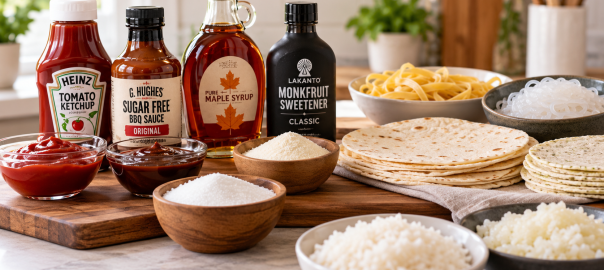
We compared common staples with their low-carb replacements at the same serving. Regular ketchup has 10 g of net carbs per two tablespoons, and Crazy Mooskies has 1 g. Cooked spaghetti has 26 g per 100 g, and nuPasta konjac fettuccine has none. The full chapter covers sauces, syrup, tortillas, pasta, rice and breadcrumbs, plus which swaps to start with.

Low Carb University: Nutrition Labels
Canadian labels can’t show net carbs, so the math falls to you. Our latest chapter covers what’s inside the carbohydrate line, how to calculate net carbs, and how to spot sugar in the ingredient list. It also explains why a keto snack can still carry a “high in saturated fat” symbol. Read on to learn more.
Low Carb University: The Baking Shelf
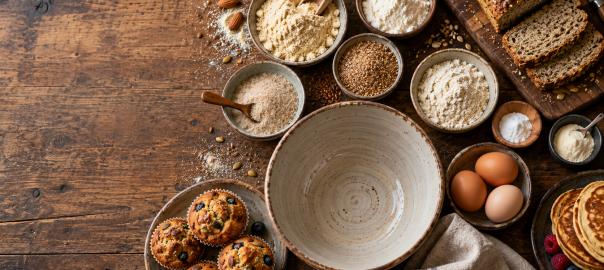
Low-Carb Pantry University, Chapter Three: the baking shelf. A quarter cup of coconut flour replaces a full cup of wheat flour. One tablespoon of flaxseed meal and three of water makes an egg. Half a teaspoon of xanthan gum thickens a cup of liquid. Every ingredient on that shelf is replacing one specific thing wheat flour and sugar used to do. Our new guide explains which is which.
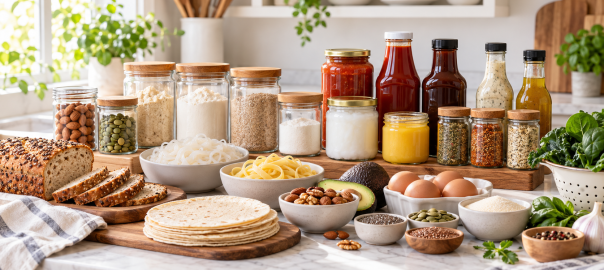
Low Carb University: 25 Pantry Staples
Twenty-five low-carb staples, sorted by what they actually do. Bread at 1g net carbs a slice. A full plate of pasta for 25 calories. Sauces with the sugar taken out. Protein you can eat straight from the bag. Every entry lists its carb count and how long it keeps once opened. Chapter Two of Low-Carb Pantry University is on the blog now.

Low Carb University: Building Your Pantry
Most first low-carb grocery orders are too big. Three sweeteners, four flours, and a month later half of it is unopened. Our new pantry guide covers what’s actually in each category, which products to start with, and the five items that will carry you through a month of cooking. Sweeteners, flours, bread, pasta, condiments, spreads, chocolate and snacks, all in one place.