
25 Low-Carb Pantry Staples Every Kitchen Should Have
Low-Carb University, Chapter Two
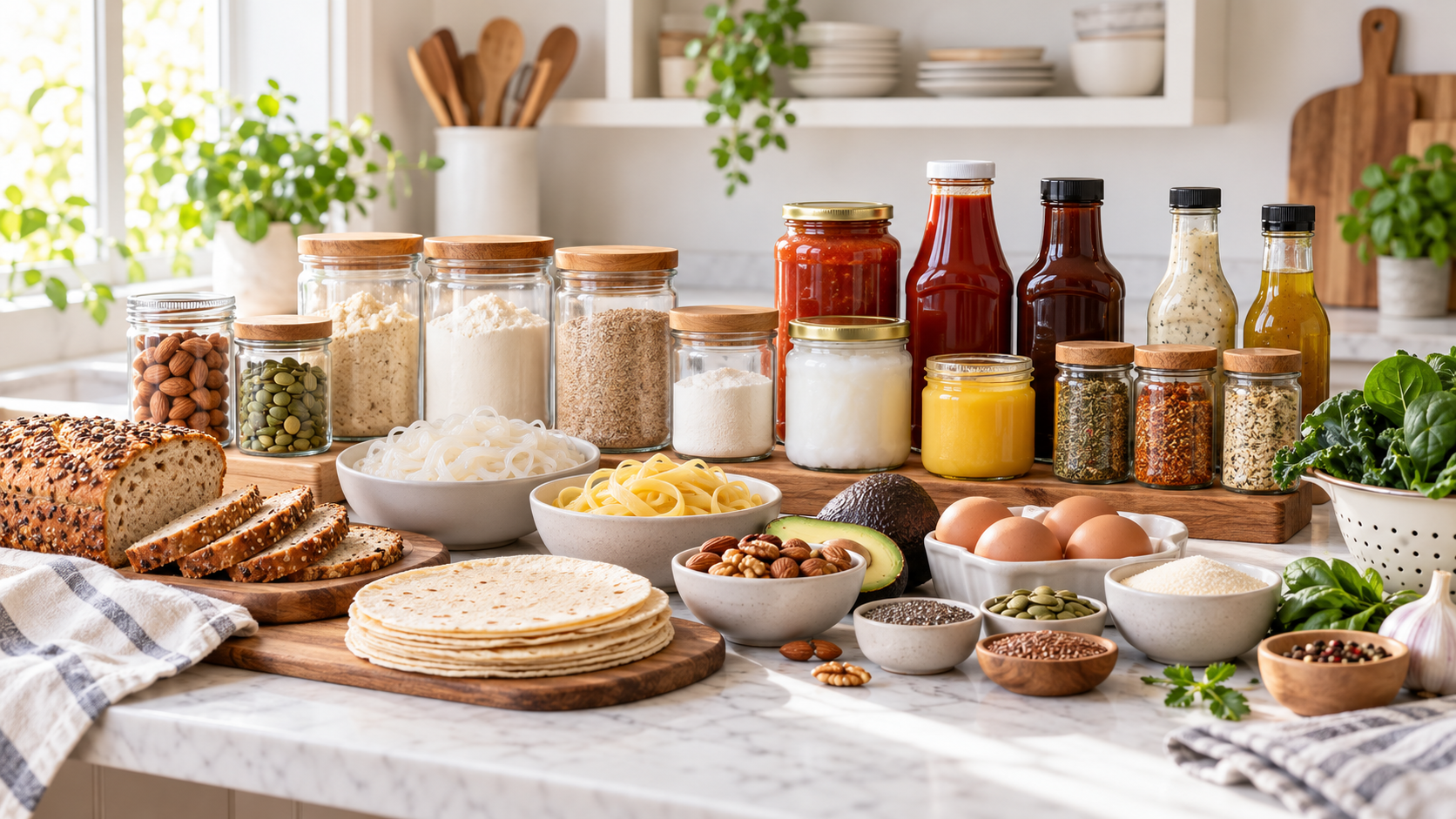
Welcome to Chapter Two of Low-Carb Pantry University. Chapter One mapped out the categories a working pantry draws on, and this one names the twenty-five products that do the most work inside them. They are grouped by the job each one does rather than by the aisle it sits in. A few replace the food outright. Others hold baking together, take the sugar out of something you already eat, or make a meal with no cooking involved.
The Direct Substitutes
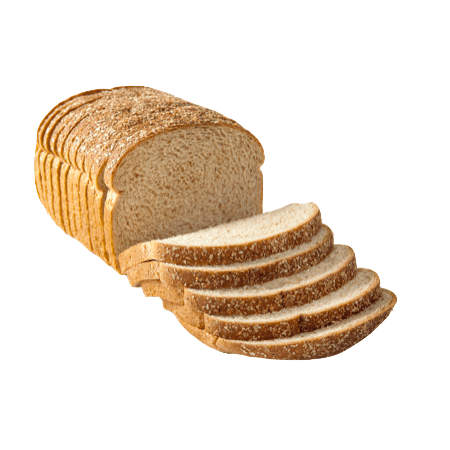
- A low-carb sandwich loaf. Carbonaut stands in for sliced bread at 1g net carbs and 40 calories a slice, in white, seeded and cinnamon raisin. Almost all the carbohydrate is fibre, 15g of the 16g total, and the loaves are gluten free and keto certified.
- Pitas, lavash or tortillas. Flatbread covers wraps and pizza bases. Joseph’s Bakery flax pitas carry 7g net carbs and the lavash 6g, both at 60 calories. Carbonaut makes a gluten-free tortilla as well. Joseph’s says to use its flatbreads within two weeks or freeze them unopened for up to a year.
- Low-carb pasta. nuPasta puts 25 calories, 6g of fibre and no net carbs in a 210g serving, which is a full plate of pasta. Konjac flour with a little non-GMO soy gives it a softer texture than other shirataki noodles. The Italian-style range is the wheat-based alternative, with a firmer bite and a higher carb count. Sealed konjac keeps for months at room temperature, though freezing ruins the texture.
- A rice substitute. nuPasta’s Konjac Risoni is the same fibre in a grain shape, made for stir-fries, curries and casseroles, and it carries the same 25 calories and 6g of fibre a serving. It cooks and keeps the same way as the noodles.
- Pancake and waffle mix. A mix built on nut flour replaces the wheat one. Birch Benders Keto needs only water and comes in at 5g net carbs a serving. Nut flours go stale, so an opened box belongs in the fridge.
What Holds Baking Together
- Blanched almond flour. Most low-carb recipes are written around almond flour, at roughly 3g net carbs per quarter cup, so one bag covers a household’s baking. Anthony’s Goods sells a 907g bag. Ground almonds turn rancid, so an opened bag keeps six to twelve months in the fridge or freezer.
- Coconut flour. Coconut flour costs less per bag and goes into a recipe in much smaller quantities, since it soaks up three to four times the liquid almond flour does. With little oil in it to spoil, one bag lasts months in a sealed cupboard container.
- Psyllium husk. Psyllium gives homemade low-carb bread its structure and chew, and nothing else on this list does that job. A sealed bag keeps for years as long as it stays dry.
- Xanthan gum. Xanthan gum replaces cornstarch in gravies, pan sauces and dressings, and a quarter teaspoon thickens a cup of liquid. One jar lasts a long time at that rate, and it stays good for years in a dry cupboard.
- A high-heat cooking fat. Coconut oil and ghee carry no carbs and hold up to frying and roasting temperatures. Wild Tusker organic virgin coconut oil comes in three sizes, and the cooking oils category also has camelina and macadamia oils. Coconut oil holds a year or more in a cupboard, ghee lasts several months once opened, and the nut and seed oils keep better cold.
Taking the Sugar Out
- A granular 1:1 sweetener. Lakanto Monkfruit Classic measures cup for cup against sugar, so recipes need no conversion and one bag serves both coffee and baking. The sweetener comparison sets out how the bases differ. Sweeteners keep indefinitely as long as they stay dry, since humidity turns them into a solid brick.
- Sugar-free ketchup. Regular ketchup carries 4 to 5g of sugar per tablespoon. The sugar-free versions have none. An opened bottle belongs in the fridge, where it keeps a few months.
- Barbecue sauce. Barbecue sauce carries more sugar than ketchup does, so the swap saves more per bottle. Walden Farms makes a version with none, and it keeps about as long as the ketchup once opened.
- Pasta sauce with no added sugar. Hunt’s Premium No Added Sugar comes in a 680g jar, and the Yo Mama’s tomato sauces are low sodium as well as sugar-free. An opened jar keeps about five days in the fridge.
- A zero-calorie dressing. Bottled dressings are a common source of added sugar, and the zero-calorie range covers the creamy ones as well as the vinaigrettes. A bottle keeps two or three months in the fridge.
- A sugar-free seasoning blend. Most commercial rubs contain sugar, and the front of the jar rarely says so. Blends without it are listed under seasonings and spice, and one jar seasons meat, vegetables and eggs. Ground blends stay safe for years but lose most of their strength after about twelve months.
- Sugar-free pancake syrup. Maple syrup is close to pure sugar, and using less of it doesn’t lower the carbs by much. Sugar-free pancake syrup replaces it. An opened bottle holds several months in the fridge.
- Jam without added sugar. Ordinary jam carries around 13g of carbohydrate per tablespoon, six times what the slice of toast under it holds. Fruit spreads are made without it. Sugar is also the preservative in a conventional jar, so a sugar-free one lasts a few weeks in the fridge rather than months.
- Sugar-free chocolate chips. Krisda Chocolatey Chips come in at 2g net carbs per serving and melt properly for baking. A bag keeps six to twelve months in a cool cupboard.
Meals Without Cooking
- Natural nut butter. Peanut butter with nothing in it but peanuts and salt is already low-carb at 4 to 5g net carbs per two tablespoons. Nut and seed butters also come in almond and sunflower seed. With no stabilizers in it, natural nut butter keeps three or four months in the fridge.
- Whey protein powder. Most whey isolates land at one to three grams of carbohydrate per scoop, and the same tub works as a drink or as an ingredient in baking. The guide to protein shakes sets out when each type is useful. A sealed tub holds a year or two, and an opened one keeps six to twelve months.
- A protein bar. Love Good Fats keto bars carry 8 to 10g of protein and 1 to 2g of sugar at about 5g net carbs, and the brand’s high-protein line runs to 20g of protein at 3g net carbs. Power Crunch wafers hold 13g of protein but 10 to 13g of carbohydrate. Bars keep for several months in a cupboard.
- Jerky or meat sticks. Most supermarket jerky contains added sugar, so the ingredient list is worth reading. Nick’s Sticks are grass-fed beef, sugar-free at zero net carbs a serving, and the jerky category also carries BUFF bison and Dick Duff’s organic beef. A sealed bag lasts months, though an opened one dries out inside a week or two.
- Broth or instant soup. A low-carb diet increases sodium loss, and broth is a simple way to replace it. Siip sells broth in single sticks at 8g of protein and no carbs, and Bone Brewhouse makes an instant chicken version. Sticks and packets sit unopened for a year or more, though anything made up in advance keeps about four days in the fridge.
- Cheese crisps. Cheese crisps are baked cheese and nothing else. Cello Whisps parmesan carries 13g of protein, 1g of carbohydrate and no sugar a serving, and Parm Crisps and the Canadian-made Ivanhoe do the same job. Sealed bags hold for months, though an open one softens within a couple of days.
Four Jobs, Twenty-Five Products
Five of the twenty-five stand in for bread, pasta, rice and pancakes. Five hold low-carb baking together. Nine take the sugar out of sauces, spreads and sweeteners. Six make a meal with no cooking at all.
Most of them sit in a cupboard for six months or more, which is what makes them staples rather than groceries. The exceptions are the opened jars and bottles, the nut butter and the nut flours, all of which belong in the fridge.
Where to Buy These
The Low Carb Grocery stocks every product named above. The full catalogue is searchable by brand, and current markdowns sit on the sale page.
Shipping is free across Canada on orders over $99, and free locally in the GTA over $69. The Markham store at 170 Esna Park Drive, Unit #8 takes in-person pickup, and questions about a product or an order go through the contact page.
Chapter Three covers low-carb baking ingredients. The series plan lists every chapter.


Explore Our Popular Shopping Categories



More Low Carb Lifestyle Articles
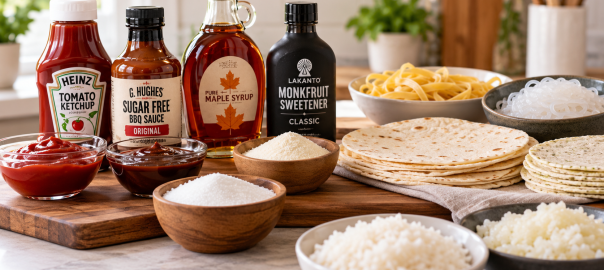
Low Carb University: Everyday Alternatives
We compared common staples with their low-carb replacements at the same serving. Regular ketchup has 10 g of net carbs per two tablespoons, and Crazy Mooskies has 1 g. Cooked spaghetti has 26 g per 100 g, and nuPasta konjac fettuccine has none. The full chapter covers sauces, syrup, tortillas, pasta, rice and breadcrumbs, plus which swaps to start with.

Low Carb University: Nutrition Labels
Canadian labels can’t show net carbs, so the math falls to you. Our latest chapter covers what’s inside the carbohydrate line, how to calculate net carbs, and how to spot sugar in the ingredient list. It also explains why a keto snack can still carry a “high in saturated fat” symbol. Read on to learn more.
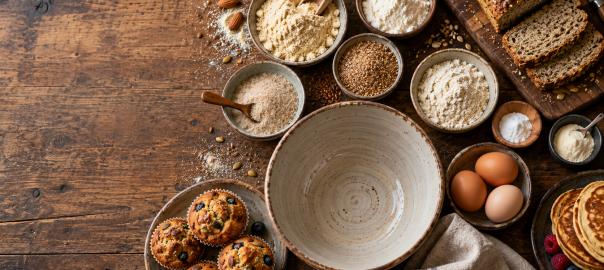
Low Carb University: The Baking Shelf
Low-Carb Pantry University, Chapter Three: the baking shelf. A quarter cup of coconut flour replaces a full cup of wheat flour. One tablespoon of flaxseed meal and three of water makes an egg. Half a teaspoon of xanthan gum thickens a cup of liquid. Every ingredient on that shelf is replacing one specific thing wheat flour and sugar used to do. Our new guide explains which is which.
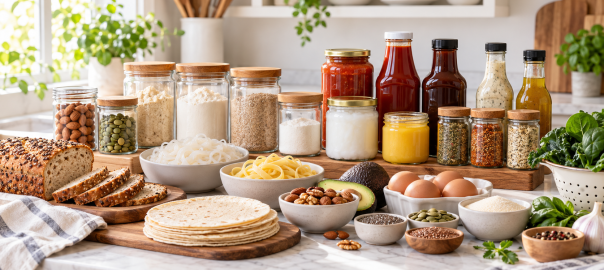
Low Carb University: 25 Pantry Staples
Twenty-five low-carb staples, sorted by what they actually do. Bread at 1g net carbs a slice. A full plate of pasta for 25 calories. Sauces with the sugar taken out. Protein you can eat straight from the bag. Every entry lists its carb count and how long it keeps once opened. Chapter Two of Low-Carb Pantry University is on the blog now.
Low Carb University: Building Your Pantry
Most first low-carb grocery orders are too big. Three sweeteners, four flours, and a month later half of it is unopened. Our new pantry guide covers what’s actually in each category, which products to start with, and the five items that will carry you through a month of cooking. Sweeteners, flours, bread, pasta, condiments, spreads, chocolate and snacks, all in one place.