
Everyday Alternatives That Cut Carbs Without Sacrificing Flavour
Low-Carb University, Chapter Five
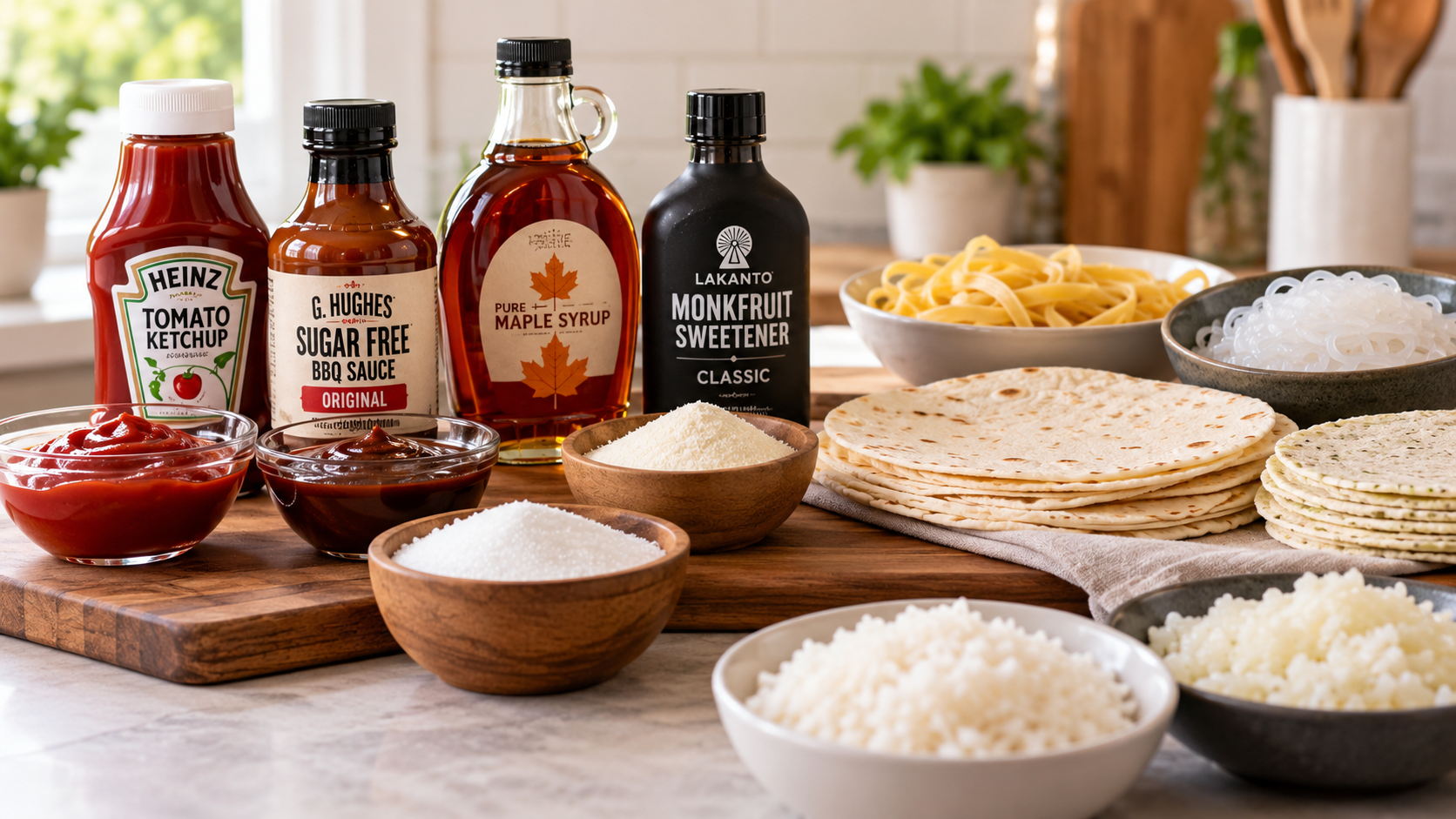
Chapter Four explained the carbohydrate line on a Canadian label, and this chapter uses that line to compare the staples in a typical cupboard with the low-carb products that replace them. Nearly every staple has a low-carb version on the shelf, and those versions don’t all behave the same way. Some go unnoticed at the table, and others change the texture of a meal enough that they take a few tries to get used to.
The sections below put the numbers side by side and then work through the swaps in order, starting with the ones that change a meal the least. Ketchup and barbecue sauce come first, followed by sugar, syrup and tortillas, then pasta and rice, and finally wheat flour and breadcrumbs.
The last section suggests an order for bringing the swaps into a pantry without replacing everything at once.
Side by Side
Each row compares a staple with its replacement at the serving shown in brackets. Net carbs are total carbohydrate minus fibre, and the Lakanto figure also subtracts erythritol, a sugar alcohol.
| Staple | Net carbs | Low-carb swap | Net carbs |
| Heinz Organic Ketchup (2 tbsp) | 10 g | Crazy Mooskies Gourmet Ketchup | 1 g |
| Sweet Baby Ray’s Original BBQ Sauce (2 tbsp) | 18 g | G. Hughes Sugar-Free BBQ Sauce, Original | 2 g |
| White sugar (2 tsp) | 8 g | Lakanto Classic Monkfruit Sweetener | 0 g |
| Pure maple syrup (2 tbsp) | 27 g | Walden Farms Pancake Syrup | 1 g |
| Wheat tortilla, 20 cm (1 tortilla) | 25 g | Carbonaut Gluten-Free Tortilla | 1 g |
| Spaghetti, cooked (100 g) | 26 g | nuPasta Konjac Fettuccine, as packed | 0 g |
| Egg noodles, dry (56 g) | 38 g | Al Dente Carba-Nada Egg Fettuccine, dry | 24 g |
| White rice, cooked (100 g) | 29 g | Better Than Foods Rice-Shaped Konjac, drained | 0 g |
Sauces Nobody Notices
Two tablespoons of Heinz Organic Ketchup carry 10 g of carbohydrate, all of it sugar, and organic sugar is the second ingredient after tomato paste. The same two tablespoons of Crazy Mooskies Gourmet Tomato Ketchup have 1 g of carbohydrate and 5 calories, with stevia in place of the sugar.
On a burger or brushed over a meatloaf, the difference between the two is hard to pick out.
Sweet Baby Ray’s Original Barbecue Sauce has 18 g of carbohydrate in two tablespoons, 17 g of it sugar, and high fructose corn syrup is its first ingredient. The Original flavour of the G. Hughes Smokehouse sugar-free sauces has 2 g of carbohydrate in the same two tablespoons, and the line also includes Hickory, Mesquite, Maple Brown and Carolina Gold.
A sauce without sugar doesn’t caramelize on the grill the way a sugary one does, so ribs finished with it stay glossy instead of picking up dark, sticky edges.
Sugar and Syrup
These swaps taste close to the original but not identical, and each one takes a week or two of regular use to judge.
Two teaspoons of white sugar have 8 g of carbohydrate. The same two teaspoons of Lakanto Classic Monkfruit Sweetener, a blend of monk fruit and erythritol, also list 8 g of carbohydrate, all of it erythritol, which Lakanto counts as zero net carbs. It matches sugar cup for cup, so a recipe doesn’t need converting.
The erythritol leaves the cooling aftertaste described in Chapter One, which some people notice and others don’t.
Two tablespoons of pure maple syrup have 27 g of carbohydrate and no fibre, for 27 g of net carbs. The sugar-free syrups replace the sugar with other sweeteners:
- Walden Farms Pancake Syrup has 1 g of carbohydrate and no fibre in two tablespoons, for 1 g net, and is sweetened with sucralose.
- Maple Grove Farms Sugar-Free, Low Calorie Syrup in Original Maple Flavour has 3 g of carbohydrate and no fibre in two tablespoons, for 3 g net, and 2 g of that carbohydrate is sorbitol, a sugar alcohol.
Counting methods that subtract sugar alcohols as well bring Maple Grove Farms down to 1 g net. Walden Farms gets its body from cellulose gum and xanthan gum rather than sugar. Neither syrup tastes like pure maple syrup. Over pancakes with butter the gap is small, and eaten plain the difference is obvious.
Tortillas and Wraps
A 20 cm wheat tortilla carries 27 g of carbohydrate and 2 g of fibre, for 25 g of net carbs. The low-carb versions replace most of the starch with fibre:
- Carbonaut Gluten-Free Tortillas have 12 g of carbohydrate and 11 g of fibre per tortilla, for 1 g net, from a fibre blend with fava bean and chickpea protein, and are the only one of the three made without wheat.
- Toufayan Keto Wraps have 11 g of carbohydrate and 11 g of fibre per wrap, for 0 g net, and are made with modified food starch, wheat gluten, cellulose and oat fibre.
- Joseph’s Flax, Oat Bran and Whole Wheat Wraps have 12 g of carbohydrate and 4 g of fibre per wrap, for 8 g net, and contain whole wheat flour.
The fibre makes these wraps firmer than a wheat tortilla, and warming one for a minute in a dry pan makes it easier to fold.
Pasta and Rice
Cooked spaghetti carries 28 g of carbohydrate and 2 g of fibre per 100 g, and the closest low-carb replacements either drop that to zero with a very different texture or keep the texture and cut the carbs partway.
nuPasta Konjac Fettuccine is made from water, konjac flour and soy flour.
Each 100 g of the noodles as packed has 3 g of carbohydrate, all of it fibre. Konjac noodles don’t taste like wheat. They’re springier and carry whatever sauce goes on them, and the dry-pan method in Chapter One keeps them from turning rubbery. In a garlicky stir-fry or a bowl of broth they work well. Under a plain tomato sauce the difference from wheat pasta is easier to notice.
Al Dente’s Carba-Nada Egg Fettuccine, which the manufacturer now sells as Protein Egg Fettuccine, is the other route. It’s made from durum wheat semolina, wheat protein, resistant wheat starch and egg, so it eats like real egg noodles and isn’t gluten-free.
A 56 g portion of the dry noodles has 32 g of carbohydrate and 8 g of fibre, for 24 g net, where the same weight of regular dry egg noodles has 40 g of carbohydrate and 2 g of fibre, for 38 g net. That makes it a reduced-carb pasta rather than a low-carb one, and it suits someone with room in the daily count more than someone keeping to the strictest limits.
Cooked white rice has 29 g of carbohydrate per 100 g and almost no fibre.
Better Than Foods Organic Rice-Shaped Konjac is made from konjac flour and oat fibre and has 4 g of carbohydrate per 100 g drained, all of it fibre. It heats in a pan in a minute or two. An opened package keeps for up to two days covered in water in an airtight container.
Under a curry or in fried rice, where the sauce does most of the work, it stands in for rice without much notice. As a plain side dish it’s chewier than rice, and that’s the version of this swap that takes the most getting used to.
Jarred pasta sauce can put sugar back onto a low-carb plate. Yo Mama’s Premium Low Sodium Tomato Sauce in Basil has no sugar added and is made from tomatoes, basil, onions, garlic and olive oil.
Flour and Breadcrumbs
All-purpose flour has 50 g of carbohydrate in 125 mL, and no single replacement works in every recipe. Almond flour, coconut flour and the binders that hold low-carb baking together each behave differently, and Chapter Three goes through them one at a time.
For biscuits and other recipes written for a boxed mix, Carbquik Complete Biscuit and Baking Mix is the most direct swap. It’s made with Carbalose flour, has 90% fewer carbs than regular flour and works like a traditional mix.
Breadcrumbs have no ready-made low-carb version on the shelf. Crushed pork rinds do the job instead, coating chicken cutlets and pork chops with a crust that crisps in the oven or the pan. Dakota Rinds are made in Canada and contain zero carbs.
A bag goes into a food processor or a sealed freezer bag under a rolling pin, and the crumbs press onto meat that has been dipped in beaten egg. The flavour is richer than breadcrumbs and closer to a pork crackling, which suits schnitzel and fried chicken. Grated Parmesan mixed into the crumbs gives the crust a sharper, saltier edge.
Where to Start
A pantry can take on the swaps in three stages:
- Ketchup and barbecue sauce come first, since they barely change how a meal tastes and they save carbs every time they’re used.
- A sweetener and one type of wrap come next.
- Pasta, rice and baking mixes come last, since they change the most about a meal.
One product per staple is enough to start. Trying two ketchups and three wraps in the same order makes it harder to tell which one actually works, and it leaves half-used bottles in the fridge.
Shopping the Swaps
Every low-carb product in this chapter is stocked at The Low Carb Grocery, and each product page lists its Nutrition Facts so the label can be checked before ordering.
Shipping is free across Canada on orders over $99 (most locations), and local GTA delivery is free on orders over $69. The team answers questions about a specific product through the contact page.
Chapter Six covers building a low-carb pantry on a budget.

Explore Our Popular Shopping Categories


More Low Carb Lifestyle Articles
Low Carb University: Everyday Alternatives
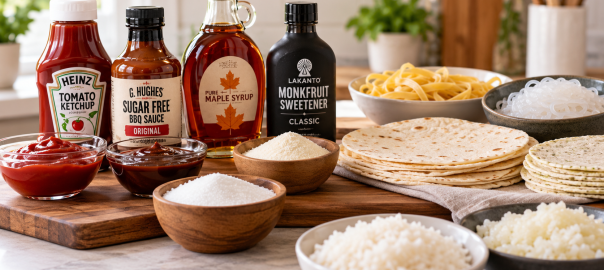
We compared common staples with their low-carb replacements at the same serving. Regular ketchup has 10 g of net carbs per two tablespoons, and Crazy Mooskies has 1 g. Cooked spaghetti has 26 g per 100 g, and nuPasta konjac fettuccine has none. The full chapter covers sauces, syrup, tortillas, pasta, rice and breadcrumbs, plus which swaps to start with.

Low Carb University: Nutrition Labels
Canadian labels can’t show net carbs, so the math falls to you. Our latest chapter covers what’s inside the carbohydrate line, how to calculate net carbs, and how to spot sugar in the ingredient list. It also explains why a keto snack can still carry a “high in saturated fat” symbol. Read on to learn more.
Low Carb University: The Baking Shelf
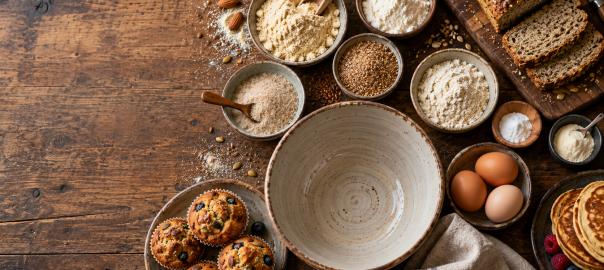
Low-Carb Pantry University, Chapter Three: the baking shelf. A quarter cup of coconut flour replaces a full cup of wheat flour. One tablespoon of flaxseed meal and three of water makes an egg. Half a teaspoon of xanthan gum thickens a cup of liquid. Every ingredient on that shelf is replacing one specific thing wheat flour and sugar used to do. Our new guide explains which is which.
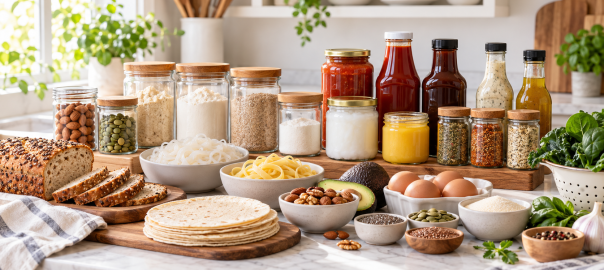
Low Carb University: 25 Pantry Staples
Twenty-five low-carb staples, sorted by what they actually do. Bread at 1g net carbs a slice. A full plate of pasta for 25 calories. Sauces with the sugar taken out. Protein you can eat straight from the bag. Every entry lists its carb count and how long it keeps once opened. Chapter Two of Low-Carb Pantry University is on the blog now.
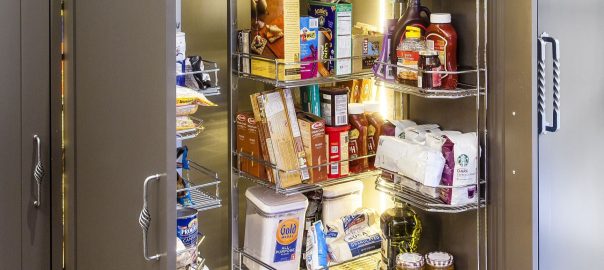
Low Carb University: Building Your Pantry
Most first low-carb grocery orders are too big. Three sweeteners, four flours, and a month later half of it is unopened. Our new pantry guide covers what’s actually in each category, which products to start with, and the five items that will carry you through a month of cooking. Sweeteners, flours, bread, pasta, condiments, spreads, chocolate and snacks, all in one place.