
Welcome to The Low-Carb University
Your Guide to Smarter Low-Carb Shopping
We’re starting something new on the Low Carb Lifestyle blog, and we’d like you to come along for it.
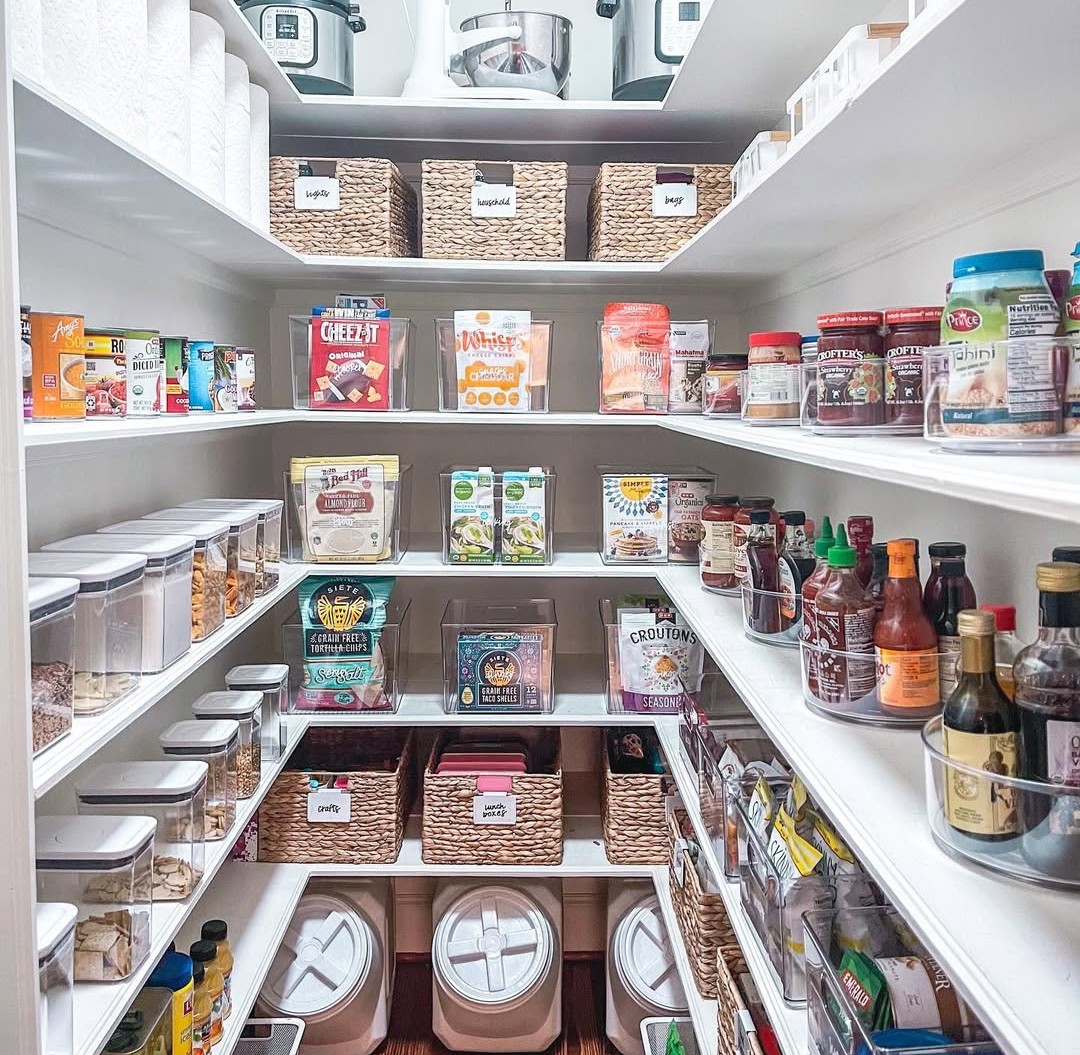
Low-Carb Pantry University will work through a low carb pantry one shelf at a time. Across fourteen chapters we’ll take a single subject at a time and tell you what belongs there, how the options differ, what the label is and isn’t telling you, and how to choose without spending money on things you’ll never open twice.
Here are the chapters we’ll be covering in the coming weeks:
- Chapter One: The Ultimate Guide to Building Your First Low-Carb Pantry
- Chapter Two: 25 Low-Carb Pantry Staples Every Kitchen Should Have
- Chapter Three: The Complete Guide to Low-Carb Baking Ingredients
- Chapter Four: How to Read Nutrition Labels Like a Low-Carb Expert
- Chapter Five: Smart Low-Carb Pantry Swaps That Save Carbs Without Sacrificing Taste
- Chapter Six: Building a Low-Carb Pantry on a Budget
- Chapter Seven: The Complete Guide to Low-Carb Pantry Organization and Storage
- Chapter Eight: The Ultimate Guide to Low-Carb Pantry Staples for Quick Weeknight Meals
- Chapter Nine: Everything You Need to Know About Low-Carb Convenience Foods
- Chapter Ten: Spring Pantry Refresh: What to Restock for the Season
- Chapter Eleven: Summer Cottage and Camping Pantry Essentials
- Chapter Twelve: The Science Behind Net Carbs, Fibre, and Sweeteners
- Chapter Thirteen: How to Build a Low-Carb Pantry That Saves Time, Money, and Food Waste
- Chapter Fourteen: Your Complete Low-Carb Pantry Maintenance Guide
We’re doing this because after twenty-plus years behind the counter in Markham, we’ve noticed the questions don’t change much.
Which flour replaces wheat flour, and in what ratio? Why is one sweetener fine in coffee but bitter in the oven? Do konjac noodles and lupin pasta do the same job? What is that “net carbs” number on the front of the box actually based on?
We answer these every week, and we’d like to answer them properly, in writing, where you can come back to them.
Why the Pantry Comes First
Most low carb advice you’ll find online is about meals. Very little of it is about stock, which is a shame, because your cupboard decides what you cook on a Wednesday no matter what any meal plan says.
A pantry you’ve stocked deliberately does four things for you.
It removes the daily decision. When the shelf holds ingredients you understand, dinner becomes a matter of cooking rather than problem-solving, and low carb eating stops feeling like a project.
It protects you on difficult days. Almost nobody abandons this way of eating on a calm Sunday. It happens on a Tuesday at half past six with nothing ready, which is exactly when a stocked cupboard earns its keep.
It saves money. Repeated small purchases, unused impulse buys and takeout ordered out of desperation cost far more over a year than a planned pantry does.
It widens what you can cook. The right flours, sweeteners and sauces on hand turn a short list of safe meals into a long one.
Our aim with this series is straightforward. By the end of it, you’ll be able to walk into any aisle, ours or anyone else’s, read what’s in front of you, and know whether it belongs in your kitchen.
Who This Is For
We’re writing for two kinds of readers at the same time, and we think both will get something out of it.
If you’re in your first month, we won’t assume you know what lupin flour is or why anyone would buy oat fibre. We’ll explain each category from the beginning, and you’ll finish each post knowing what to buy first.
If you’ve been at this for years, we’ll go deep enough on the differences between products to earn your time, and we’ll point out newer arrivals worth trying alongside the staples you already reach for.
You’ll also get straight answers rather than catalogue descriptions. Taste is personal, and so is tolerance. A sweetener one customer swears by is one another won’t touch, and a bread that makes excellent toast may not be the one you want in a sandwich. We stock these products and we hear what customers tell us about them every day, so we’ll tell you who each option tends to suit rather than leaving you to work it out by trial and error.
The Low Carb Grocery has been supplying Canadian low carb shoppers since 2004. We carry over 1,500 products across low carb, keto, sugar-free, gluten-free, diabetic-friendly and bariatric ranges. That inventory is the source material for the series.
The Fourteen Chapters
Below is the full plan for the series. As each chapter publishes we’ll link it from this page, so you can bookmark this post and use it as the table of contents for the whole series.
Chapter One: The Ultimate Guide to Building Your First Low-Carb Pantry
The cornerstone of the series. We’ll map out every category a working low carb pantry needs, explain what each one is for, and give you a sequence to build in so you’re never left with a cupboard full of ingredients that don’t combine into a meal. If you read only one chapter, make it this one.
Chapter Two: 25 Low-Carb Pantry Staples Every Kitchen Should Have
A specific shopping list rather than a category overview. We’ll name twenty-five products that do the most work for the least money, explain what each one is for and how often you’ll reach for it, and note which ones can wait if you’re building gradually.
Chapter Three: The Complete Guide to Low-Carb Baking Ingredients
Baking is where most low carb cooking goes wrong, because the ingredients behave differently from wheat flour and sugar in ways that recipes don’t always explain.
We’ll cover almond flour, coconut flour, lupin flour, oat fibre, psyllium husk, vital wheat gluten and the binders that hold everything together, including why coconut flour can’t be swapped one for one with almond flour and what happens when you try.
Chapter Four: How to Read Nutrition Labels Like a Low-Carb Expert
We’ll take you through the Canadian Nutrition Facts table and how it differs from the American version, why the ingredient list tells you more than the front panel does, and how serving sizes can make a product look better than it is. We’ll also cover the new front-of-package nutrition symbol, which has appeared on Canadian shelves since January 1, 2026, and why a product that suits a keto diet perfectly well can still carry a “high in saturated fat” marker.
Chapter Five: Smart Low-Carb Pantry Swaps That Save Carbs Without Sacrificing Taste
A side-by-side chapter. We’ll put common high carb staples next to the low carb products that replace them, covering flour, sugar, breadcrumbs, pasta, rice, tortillas, ketchup, barbecue sauce and more, with honest notes on which swaps go unnoticed and which take some getting used to.
Chapter Six: Building a Low-Carb Pantry on a Budget
Specialty products cost more than their conventional equivalents, and there’s no point pretending otherwise. We’ll show you where the money is best spent, which items are worth buying in bulk, which versatile products cover several jobs at once, and how to build a functional pantry in stages rather than in one expensive order.
Chapter Seven: The Complete Guide to Low-Carb Pantry Organization and Storage
Practical and often overlooked. Nut flours go rancid faster than wheat flour and keep better cold. Most low carb bread has less preservative content than commercial bread and belongs in the freezer. We’ll cover storage containers, freezer strategy, labelling, shelf life by category, and how to arrange a cupboard so you can actually see what you own.
Chapter Eight: The Ultimate Guide to Low-Carb Pantry Staples for Quick Weeknight Meals
The chapter that turns stock into dinner. We’ll show how a well-chosen pantry produces fast breakfasts, packable lunches, weeknight dinners and snacks with minimal fresh shopping, including combinations that work when the fridge is nearly empty.
Chapter Nine: Everything You Need to Know About Low-Carb Convenience Foods
Wraps, crackers, noodles, sauces, soups, baking mixes and ready-to-eat options. Convenience products carry a quality range wider than any other part of the store, so we’ll explain what to look for, which ones genuinely save time, and how to judge a mix or a sauce before you commit to a case of it.
Chapter Ten: Spring Pantry Refresh: What to Restock for the Season
Cooking changes with the weather. We’ll cover what to check and replace after winter, which products suit lighter spring meals, and how to rotate heavier baking staples out in favour of dressings, marinades and grilling supplies.
Chapter Eleven: Summer Cottage and Camping Pantry Essentials
A Canadian chapter. Cottage weekends, camping trips, RV travel and anywhere without a full kitchen or reliable refrigeration. We’ll cover shelf-stable proteins, snacks that survive a cooler, breakfast options that need no appliances, and how to pack a low carb food box that lasts a week.
Chapter Twelve: The Science Behind Net Carbs, Fibre, and Sweeteners
The nutrition chapter, in plain language.
Total carbohydrate on a Canadian label includes fibre and any sugar alcohols the product contains. “Net carbs” is not a regulated term in Canada, so each manufacturer sets its own formula, and the number on the front of a box is a starting point for your own arithmetic.
We’ll explain how fibre and sugar alcohols behave, how erythritol, allulose, monk fruit, stevia and maltitol differ from one another, and why maltitol behaves less like the others than its labelling suggests.
Chapter Thirteen: How to Build a Low-Carb Pantry That Saves Time, Money, and Food Waste
The habits chapter. Keeping a simple inventory, planning meals around what you already own, buying in the right quantities, and rotating stock so nothing expires at the back of a shelf. Small changes here compound over a year.
Chapter Fourteen: Your Complete Low-Carb Pantry Maintenance Guide
The wrap-up. Seasonal audit checklists, a restocking routine you can run twice a year, and links back to every chapter in the series so you can find any answer quickly.
How to Work Through It
Don’t rebuild the pantry in one order.
The most common and expensive mistake we see is the enthusiastic first purchase: forty items added to a cart on a Sunday, of which perhaps a dozen get used regularly. The rest sit unopened. It costs a lot and it sours people on the whole approach.
A better method:
- Start with the shelf that frustrates you most.
- Buy one or two items from that category, not six.
- Cook with them for two weeks before judging.
- Keep what works, note what didn’t and why.
- Move to the next shelf.
When working this way, a full pantry rebuild takes a few months, costs considerably less, and produces a cupboard of products you actually use.
What the Series Will Not Do
We won’t claim low carb bread tastes identical to bakery sourdough. Some of it is very good, some is adequate, and knowing which is which is more useful than enthusiasm.
We won’t prescribe a daily carbohydrate target. The right number depends on your health, your goals and your medications, and it isn’t something a grocery blog should decide. If you’re managing diabetes or taking medication that affects blood sugar, discuss dietary changes with your doctor or a registered dietitian.
We also won’t take sides between programs. Keto, Atkins, the Dr. Poon metabolic diet, bariatric eating, or simply cutting back on sugar all draw from the same pantry.
What we can help with is the shelf: what’s on it and how to choose well.
Before the First Lesson
Do an inventory. Take everything out of the pantry and read the ingredient list on each package rather than the front panel.
Sort into four groups.
- Products with sugar in any of its forms among the first few ingredients
- Products whose serving size is smaller than a portion you’d realistically eat
- Products carrying a net carb claim you can’t reproduce from the Nutrition Facts table
- Products you bought over a year ago and never opened
Keep the list. When Chapter Four goes up, you’ll have real examples from your own kitchen to work through, which will be far more useful than anything we could invent for you.
Following the Series
New chapters will be published on the Low Carb Lifestyle blog and linked from this page as they go live. The fastest way to catch each one is the email newsletter, which you can sign up for on our site and which also carries new arrivals, sales and product recommendations.
We announce every new chapter on Facebook and Instagram as well, so following us at @lowcarbgrocery is another way to keep up with the series.
In the meantime, browse the full low carb catalogue or the brands we carry. Shipping is free across Canada on orders over $99, and free local GTA delivery starts at $69.
Chapter One will cover building your first pantry from scratch. We’ll see you then!
Questions about a product or an order can go to the team toll-free at (888) 484-7479 or through the contact page.


Explore Our Popular Shopping Categories



More Low Carb Lifestyle Articles
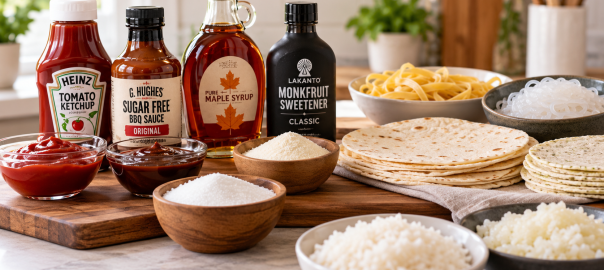
Low Carb University: Everyday Alternatives
We compared common staples with their low-carb replacements at the same serving. Regular ketchup has 10 g of net carbs per two tablespoons, and Crazy Mooskies has 1 g. Cooked spaghetti has 26 g per 100 g, and nuPasta konjac fettuccine has none. The full chapter covers sauces, syrup, tortillas, pasta, rice and breadcrumbs, plus which swaps to start with.

Low Carb University: Nutrition Labels
Canadian labels can’t show net carbs, so the math falls to you. Our latest chapter covers what’s inside the carbohydrate line, how to calculate net carbs, and how to spot sugar in the ingredient list. It also explains why a keto snack can still carry a “high in saturated fat” symbol. Read on to learn more.

Low Carb University: The Baking Shelf
Low-Carb Pantry University, Chapter Three: the baking shelf. A quarter cup of coconut flour replaces a full cup of wheat flour. One tablespoon of flaxseed meal and three of water makes an egg. Half a teaspoon of xanthan gum thickens a cup of liquid. Every ingredient on that shelf is replacing one specific thing wheat flour and sugar used to do. Our new guide explains which is which.
Low Carb University: 25 Pantry Staples
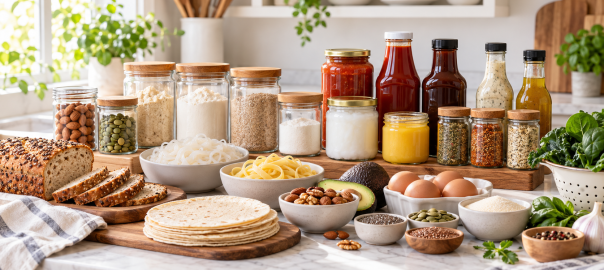
Twenty-five low-carb staples, sorted by what they actually do. Bread at 1g net carbs a slice. A full plate of pasta for 25 calories. Sauces with the sugar taken out. Protein you can eat straight from the bag. Every entry lists its carb count and how long it keeps once opened. Chapter Two of Low-Carb Pantry University is on the blog now.

Low Carb University: Building Your Pantry
Most first low-carb grocery orders are too big. Three sweeteners, four flours, and a month later half of it is unopened. Our new pantry guide covers what’s actually in each category, which products to start with, and the five items that will carry you through a month of cooking. Sweeteners, flours, bread, pasta, condiments, spreads, chocolate and snacks, all in one place.